Whispers of the World: How Quiet Journeys Redefine Travel
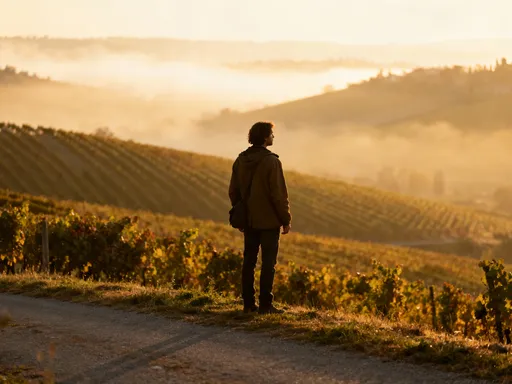
Travel is no longer only about grand sights or bucket-list check-ins. Today, the most meaningful journeys unfold in silence—in dawn-lit villages, forest trails without signals, and local markets where no tour guides speak. These quiet experiences create deeper connections, not just with places, but with oneself. As overtourism strains cities and digital distraction dulls awareness, a new way of moving through the world is emerging. This is travel reimagined: intentional, immersive, and rooted in presence. More travelers are choosing stillness over spectacle, depth over duration, and connection over consumption. The rush to collect destinations is giving way to the wisdom of absorbing them. In this shift, a profound truth reveals itself—sometimes, the loudest transformations happen in the quietest moments.
The Rise of Mindful Exploration
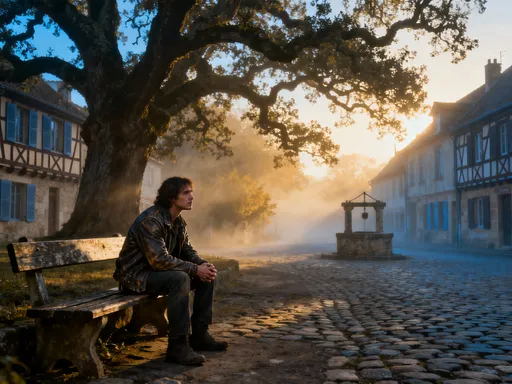
Mindful exploration represents a fundamental shift in how people engage with travel. No longer defined by the number of attractions visited or photos collected, this approach emphasizes presence—being fully alert to the sights, sounds, scents, and rhythms of a place. It is a response to the fatigue brought on by fast-paced itineraries and the mental clutter of constant connectivity. Instead of racing through iconic landmarks, mindful travelers embrace slowness, choosing to walk a single street thoroughly, savor a local meal without distraction, or sit quietly in a village square absorbing daily life. This form of travel is not passive; it is an active form of observation and emotional openness that fosters deeper understanding.
The movement toward mindful travel is not merely anecdotal—it is supported by growing data and societal trends. UNESCO has repeatedly highlighted the damaging effects of overtourism in cities like Venice, Barcelona, and Kyoto, where local life is strained by the sheer volume of visitors. Simultaneously, health studies from institutions such as the American Psychological Association have shown that extended exposure to digital stimulation and urban congestion contributes to anxiety and burnout. In contrast, research published in the Journal of Sustainable Tourism indicates that travelers who engage in slower, nature-based itineraries report up to 40% lower stress levels and higher emotional well-being during and after their trips. These findings have not gone unnoticed. Platforms like Airbnb report a sustained increase in demand for rural homes and off-grid stays, with countryside bookings rising 68% year-over-year in the last three years alone.
Real-life stories further illustrate this shift. Take Marta, a retired architecture professor from Lisbon, who now spends her winters walking the Rota Vicentina trail along Portugal’s untouched southwest coast. She describes how the rhythm of the tides and the solitude of cliffside paths helped her rebuild a sense of inner calm after years of academic pressure. Or consider Hiroshi, a Tokyo-based graphic designer who rents a traditional farmhouse each summer in Tottori Prefecture. There, without Wi-Fi or a strict schedule, he finds inspiration not in scenery, but in the quiet rituals of farming, brewing tea, and listening to elders share stories under the eaves of a wooden porch. These travelers are not rejecting cities or culture—they are redefining what it means to be enriched by a journey.
The driving force behind this evolution is a collective yearning for authenticity. In a world saturated with curated social media content, many feel disconnected from genuine experiences. The myth of nonstop adventure—long promoted by travel influencers and glossy magazines—has begun to lose its appeal. Instead, people are embracing recovery-first travel, where rest is not a luxury but a necessity. Stillness is no longer seen as wasted time; it is recognized as a vital part of healing, reflection, and reconnection. Mindful exploration, therefore, is not a trend but a necessary recalibration—a return to travel that nourishes the soul rather than depleting it.
Choosing Hidden-Gem Destinations
Selecting the right destination is the foundation of a meaningful journey, and today’s thoughtful travelers are moving beyond the usual hotspots in search of places that offer both beauty and balance. Hidden-gem destinations are not simply under-visited—they are locations where culture remains vibrant, nature is preserved, and local communities welcome visitors as guests, not intrusions. These places often possess a layered authenticity that mass tourism tends to flatten. To identify them, travelers must consider four key criteria: accessibility, cultural intactness, ecological stability, and local receptiveness. A destination may be remote, but if it lacks basic infrastructure or endangers fragile ecosystems, it may not support sustainable visitation. Conversely, a well-connected town may feel overdeveloped, losing the very qualities that make travel transformative.
Take Albania’s Ionian coast as an example. Often referred to as the “Greek Riviera’s quieter cousin,” this stretch of coastline features turquoise coves, olive-draped hills, and centuries-old fishing villages. Unlike Santorini or Mykonos, it sees a fraction of the visitors, allowing travelers to experience coastal Mediterranean life without the crush of cruise ships or souvenir stalls. Similarly, in Mexico’s Oaxaca region, the Sierra Norte mountain villages—such as Cuajimoloyas and Benito Juárez—offer cloud forest hikes, community-run eco-lodges, and weaving cooperatives preserving Zapotec traditions. These are not hidden because they are inaccessible; they are overlooked because they do not conform to the typical postcard image of vacation bliss.
Fortunately, tools are emerging to guide this kind of discovery. Google’s Off-Beat Travel Index uses anonymized search and navigation data to highlight regions experiencing growing interest but low visitor density. National Geographic’s annual “Cool List” curates 25 destinations each year based on sustainability, cultural vitality, and conservation efforts—featuring places like Gabon’s Loango National Park and Armenia’s monastic trails. These resources help travelers move beyond algorithm-driven suggestions and instead make intentional choices. Moreover, infrastructure does not have to mean luxury. Reliable access to clean water, basic healthcare, and respectful local engagement is more important than five-star resorts. The ideal balance is one where essentials are present, but commercial tourism has not reshaped the community’s identity.
Some of the most inspiring models come from community-led tourism. In Bhutan, the government enforces a “high-value, low-impact” policy, requiring visitors to pay a daily tariff that funds education, healthcare, and environmental protection. The result is a travel experience deeply woven into national well-being. In Namibia, conservancy-based tourism allows local communities to manage wildlife areas and benefit directly from ecotourism. When visitors stay at a conservancy lodge, their fees support anti-poaching efforts and school programs. These systems demonstrate that tourism, when thoughtfully designed, can be a force for preservation rather than erosion. For the individual traveler, the lesson is clear: choosing where to go is not just about personal desire—it is an ethical decision that shapes the places we visit.
The Art of Slow Arrival
The first 48 hours of any journey set the emotional and energetic tone for the entire trip. Yet most travelers rush into sightseeing with the same urgency they bring to business meetings, missing a crucial opportunity to acclimate. The art of slow arrival is a deliberate practice of resisting this impulse. It begins with arriving mid-week, when airports and transport hubs are less crowded, and daylight allows for gentle orientation. Instead of heading straight to a hotel or landmark, mindful travelers are advised to spend the first hours simply being present—sitting in a public square, walking without a destination, or sharing a simple meal with locals. This initial stillness is not inactivity; it is a form of deep listening that allows the body and mind to adjust to a new environment.
Neuroscience supports this approach. Studies from the University of California show that sensory overload—common when entering a foreign city—can overwhelm the brain’s capacity to process and retain information. When travelers try to “see everything” on Day One, they often experience mental fatigue and diminished recall. In contrast, a gradual entry allows the brain to form stronger, more vivid memories. By slowing down, travelers build what psychologists call “contextual awareness”—an intuitive sense of how a place moves, sounds, and breathes. This foundation makes subsequent experiences richer and more meaningful.
Consider a traveler arriving in the Slovenian Alps. Rather than booking a guided hike, they might check into a family-run guesthouse, unpack slowly, and take an evening walk through a nearby meadow. The scent of woodsmoke from stone cottages, the distant chime of cowbells, and the soft rustle of pine in the wind become the first impressions of the region. Similarly, a visitor to Sicily might start their journey at dawn in a small fishing village, watching fishermen mend nets on the harbor wall, then sharing a cup of strong espresso at a neighborhood bar. These moments—unplanned and unhurried—create the emotional texture of travel.
To help structure this transition, experts recommend an “arrival anchoring” itinerary. Day One might include one intentional act of local connection, such as buying bread from a baker and attempting a few words in the local dialect, or sitting in a park and noting the rhythms of daily life. Rest is emphasized—not out of laziness, but to support mental clarity. The goal is not to collect experiences, but to begin forming a relationship with the place. When travelers return home, it is often these quiet moments, not the famous monuments, that linger in memory. Slow arrival teaches us that the journey begins not with movement, but with presence.
Listening as a Travel Skill
In a world dominated by visual content, listening has become one of the most overlooked yet powerful travel skills. True listening extends beyond understanding language—it includes tuning into the sounds of nature, the silences between words, and the subtle cues of social rhythm. Many travelers miss deeper cultural meaning because they focus solely on what they can see and photograph. Yet some of the most profound moments in travel come not from observing, but from listening: the lullaby hummed by a grandmother in a Guatemalan village, the quiet murmur of prayer in a Kyoto temple garden, or the rhythmic tapping of a Balinese woodcarver at dusk.
When travelers fail to listen, they risk misunderstanding or even disrespecting local customs. For example, photographing a religious ceremony without asking may seem like documentation to a visitor, but to the community, it can feel like intrusion. These actions often stem not from malice, but from inattention—arriving with expectations rather than openness. In rural Laos, one traveler spent weeks visiting a hill tribe, initially met with polite distance. Only after she began sitting quietly each morning, listening to conversations she did not understand, did an elder eventually invite her to join a traditional song circle. That moment of inclusion came not from effort, but from patience and presence.
Practicing listening can be simple. Experts suggest setting aside 20 minutes each day to sit in one place—no phone, no notebook—and simply absorb the auditory landscape. What birds call at different times of day? When do children return from school? How does the market’s energy shift from morning bustle to afternoon calm? This practice builds cultural fluency, helping travelers recognize patterns and participate respectfully. In Norway, sound-mapping projects have begun turning forest acoustics into travel guides, teaching visitors to identify bird species, weather changes, and seasonal shifts through audio alone. These tools reframe listening as a form of navigation and understanding.
At its core, listening is an act of humility and respect. It acknowledges that we do not need to speak or be seen to be part of a place. By making listening a daily practice, travelers move from being observers to participants. They begin to sense the heartbeat of a community, not just its façade. In doing so, they honor the dignity of the people and places they visit, building bridges not through grand gestures, but through quiet attention.
Crafting Your Personal Travel Rhythm
Every traveler has a unique energy pattern, yet most itineraries are designed for a mythical “average” person—one who thrives on early starts, back-to-back activities, and constant stimulation. In reality, sustainable travel requires aligning the journey with individual rhythms. An introverted traveler may find a museum overwhelming after a crowded train ride, while an early riser might cherish a sunrise walk missed by others. Recognizing these differences is not indulgence; it is essential for meaningful engagement. Just as a musician tunes an instrument to play in harmony, travelers must tune their schedules to their natural energy cycles.
A practical way to begin is by mapping personal energy across the day and week. Track when you feel most alert, curious, or calm. Some travelers discover that their peak focus is in the late morning, making it ideal for cultural visits, while evenings are better suited for quiet reflection or dining. Others find that afternoons bring fatigue, and a midday rest leads to richer evening experiences. When travelers honor these patterns, they avoid burnout and memory gaps—the result of trying to do too much on someone else’s terms. One study from the Travel Well Initiative found that 63% of participants reported higher satisfaction when they limited activities to two per day and included rest periods.
A traveler’s log can be a powerful tool for this self-awareness. A simple template might include columns for time, activity, energy level (1–10), mood, and engagement. Over time, patterns emerge. For instance, a mother from Minnesota realized that her best connections with locals happened during mid-morning market visits, when her children were still energetic and open to curiosity. In contrast, afternoon temple tours left them irritable and disengaged. By adjusting her rhythm, she transformed her family’s experience in Bali. Another traveler, a writer from Toronto, discovered that writing in the late afternoon—when the light softened and noise faded—produced her most vivid journal entries.
There is no universal rhythm, and travelers should feel permission to experiment. Try one museum per trip instead of five. Alternate half-day explorations with full rest days. Normalize saying no to activities that don’t align with your energy. Sustainable travel is not about endurance; it is about resonance. When the pace of the journey matches the traveler’s inner world, each moment becomes more vivid, more memorable, and more meaningful.
Leveraging Low-Impact Tools
In an age of digital convenience, the most powerful travel tools are often the simplest. While apps promise efficiency, they can also narrow experience—herding travelers to the same cafes, attractions, and photo spots. In response, many are returning to low-impact tools that extend attention rather than fragment it. Offline maps, paper journals, grayscale phone settings, and translation notebooks are gaining popularity among mindful travelers. These tools reduce dependency on signals and algorithms, encouraging curiosity, spontaneity, and deeper engagement.
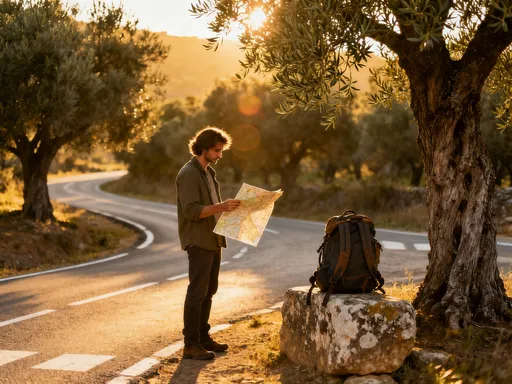
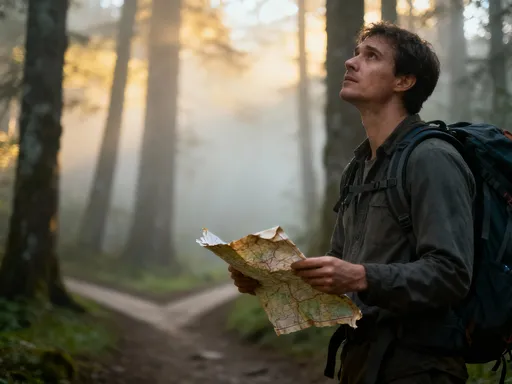
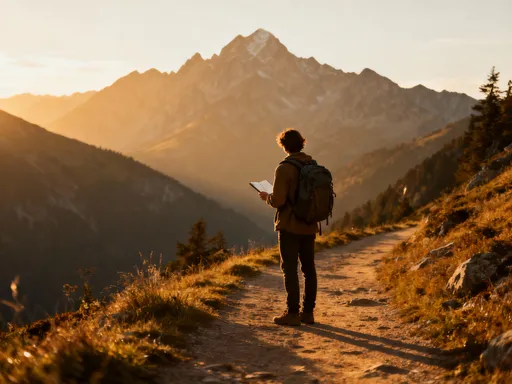
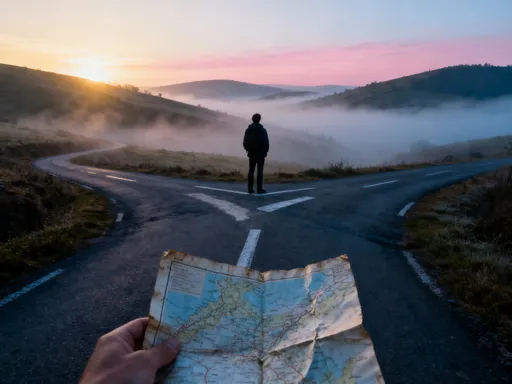
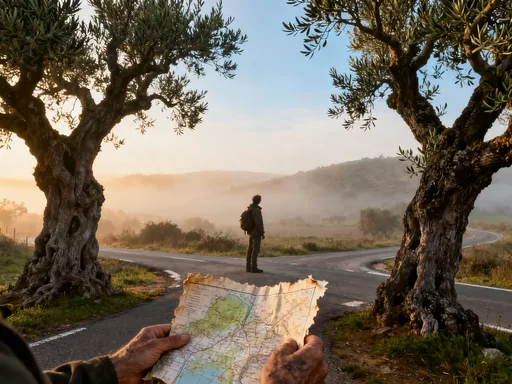
One compelling finding from the Mindful Travel Survey of 2023 revealed that 74% of travelers who kept handwritten journals reported higher recall of sensory details—scents, textures, emotions—compared to those who relied solely on digital photos. Writing by hand slows perception, allowing the brain to process experience more fully. Similarly, using a physical map invites spatial awareness; travelers begin to understand how places connect, rather than treating each destination as a pin on a screen. Even something as simple as a bilingual phrasebook fosters connection, prompting genuine interactions with locals who appreciate the effort.
Other tools include audioguides narrated by local historians or community elders, which offer context without replacing personal observation. Community calendars—often posted in village halls or cafes—show local festivals, markets, or religious events, allowing travelers to participate authentically rather than as spectators. Some travelers now delete geotagging apps to resist the pressure of “must-see” locations, finding that getting slightly lost leads to unexpected discoveries: a hidden garden, a street musician, a conversation with a shop keeper. This gentle friction—small challenges without danger—reignites curiosity and presence.
The goal is not to reject technology entirely, but to use it with intention. A grayscale phone setting, for example, reduces visual stimulation and promotes mindful usage. Downloading content in advance ensures access without constant connectivity. The key is balance: tools should enhance, not dominate, the journey. When travelers reclaim agency from algorithms, they rediscover the joy of discovery—the quiet thrill of finding something not because it was recommended, but because they were paying attention.
Leaving Quiet Traces
The legacy of a journey should not be measured in souvenirs or social media likes, but in the subtle, lasting ripples it creates. Leaving quiet traces means making choices that benefit the places and people visited, often in ways unseen by others. This might include planting a tree with a local conservation group, learning a few phrases in a regional dialect, or purchasing crafts directly from women-led cooperatives. These actions may seem small, but over time, they accumulate into meaningful impact. Unlike performative voluntourism—which often prioritizes the traveler’s image over real change—quiet traces are rooted in respect, humility, and continuity.
Consider the story of Elena, a teacher from Ohio, who visited a weaving village in Guatemala. Instead of buying mass-produced souvenirs, she spent time with a local cooperative, learned about natural dyeing techniques, and commissioned a small textile. Years later, she still wears it, and shares its story with her students. Her purchase supported the artisans directly and helped preserve a cultural tradition at risk of fading. Or take David, who volunteered briefly on a reforestation project in Portugal’s Alentejo region. He didn’t post about it, but the trees he planted continue to grow, filtering air and sheltering wildlife. These are not grand gestures—they are deliberate, humble acts that outlast the traveler’s presence.
Travelers can also leave quiet traces through simple kindness: writing a sincere thank-you note to a host family, recommending a small guesthouse to friends, or sharing fair compensation with local guides. These gestures reinforce dignity and support sustainable livelihoods. The compounding effect of such choices, multiplied across millions of travelers, can reshape the tourism industry not through policy alone, but through everyday ethics.
Ultimately, travel is not about how many places we see, but how deeply we engage with the ones we visit. The world does not need more footprints. It needs more whispers—moments of attention, care, and quiet connection that honor the places and people who welcome us. When we travel with intention, we do not take from the world. We listen. We learn. And in return, we leave behind not noise, but meaning.