Where the Wild Winds Write: Crafting Journeys That Echo Beyond the Map
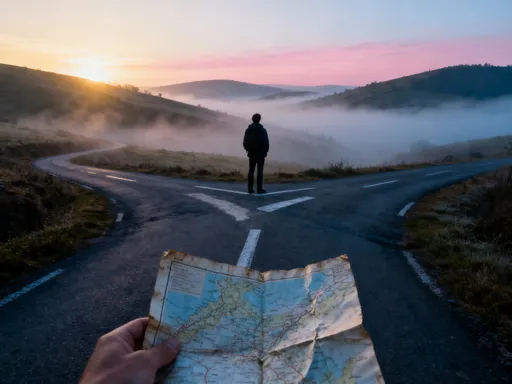
Travel is more than movement—it’s transformation. Every step into the unknown reshapes perspective, revealing not just new landscapes, but deeper layers of the self. In a world where destinations blur into algorithms and itineraries, the true art of travel lies in intention. It’s not about ticking boxes, but about tuning into moments that linger: the hush before dawn in a mountain village, the scent of salt on a forgotten coast. This journey is one of mindful choices—where to go, how to move, and why it matters.
The Mindful Compass: Rethinking Why We Travel
Modern travel has undergone a quiet revolution. Once defined by passport stamps and photo albums, it now leans toward introspection and emotional resonance. The shift from checklist tourism to experience-led journeys reflects a deeper hunger—not for more places, but for more meaning. Research from the Global Wellbeing Travel Council indicates that over 68% of travelers over 30 now prioritize personal growth over convenience when planning trips. This is not escapism, but a search for alignment: between who we are and who we hope to become.
Intentionality forms the cornerstone of this transformation. When travelers pause to ask not just 'Where should I go?' but 'Why do I want to go there?', the journey begins long before departure. A woman from Minnesota traveling to a remote village in northern Portugal didn’t seek Insta-fame, but silence after years of caregiving for her aging mother. Her trip wasn’t listed on any influencer’s radar, yet she returned with a renewed sense of agency. Purpose shapes perception: the same cobblestone street appears differently through the eyes of someone seeking healing versus someone chasing a trend.
Case studies from the Slow Travel Movement reinforce this. In a 2023 survey, 74% of participants who engaged in multi-week stays with rural host families reported lasting shifts in their values, particularly around simplicity and presence. Purpose doesn’t require grand destinations. It can be as simple as seeking connection, restoring balance, or rediscovering curiosity. When intention guides the journey, even a weekend trip to a nearby town can become a milestone in personal evolution.
Choosing the Unseen: How to Select Destinations with Soul
Too often, travel decisions are shaped by social feeds and top-ten lists. Yet the most profound destinations rarely top those rankings. They are the places not yet polished for mass appeal—the island where fisherfolk still mend nets by hand, the valley where festivals unfold without a single digital broadcast. Choosing such places requires a different compass: one that values authenticity, sustainability, and emotional resonance over convenience and popularity.
Data paints a clear picture. According to the World Tourism Organization, 12 cities absorb 30% of all international travelers, leading to strain on infrastructure, rising living costs for locals, and cultural erosion. Venice, for example, sees over 25 million visitors annually, while its resident population has dipped below 50,000. This imbalance has sparked a global conversation about regenerative travel—a model where visitors contribute more than they consume. In contrast, regions like the Apuseni Mountains in Romania or the Tusheti region in Georgia welcome travelers with the condition that their presence supports preservation, not displacement.
To make mindful destination choices, travelers can apply a three-part framework. First, assess authenticity by asking: Does this place retain its own rhythm, or does it perform for tourists? A community that eats dinner at 9 p.m., even in high season, likely maintains its cultural integrity. Second, evaluate sustainability: Are accommodations solar-powered? Are local guides employed? Third, consider emotional resonance—does the destination evoke a quiet pull, a sense of belonging before you’ve even arrived? This is often felt more than reasoned, like a whisper beneath the noise of daily life.
Tools are emerging to support this. Platforms like Goodspot and Regenerate.Travel offer scorecards combining visitor density with local well-being metrics. A comparative chart might show Santorini with high tourist traffic but low community benefit, while nearby Folegandros scores lower in visitors but higher in cultural exchange and economic equity. The unseen destinations are not hidden by design, but by choice—they wait for those willing to look beyond the surface.
The Rhythm of Arrival: Slowing Down to Truly See
The most profound travel experiences often occur not during grand events, but in the stillness between them. A woman in Kyoto once described how her most memorable moment wasn’t visiting a temple, but sitting on a wooden engawa porch at 5:30 a.m., watching steam rise from a teacup as cherry blossoms drifted onto the garden stones. This is the power of slowness—a deliberate choice to decelerate, to allow the senses to absorb what speed obscures.
Presence is not passive; it is a skill cultivated through practice. Cognitive science supports this. Attention Restoration Theory, developed at the University of Michigan, shows that natural environments rich in 'soft fascination'—like rustling leaves, distant bird calls, or flowing water—help restore mental focus and reduce cognitive fatigue. When travelers slow down, they don’t just see more—they think more clearly, feel more deeply, and remember more vividly.
Slowed travel is not a rejection of planning, but a reordering of priorities. Instead of cramming five cities into ten days, it means spending three days in one village, returning to the same market stall each morning, learning the name of the vendor’s dog. It means arriving by train instead of plane, feeling the landscape unfold gradually rather than being dropped into a destination from above. On a highland trail in Bhutan, the sound of yak bells becomes a metronome for presence, each chime pulling the mind back to the path, the breath, the moment.
Hotels and retreat centers are beginning to formalize this. Some now offer 'digital sunset' hours, where Wi-Fi disconnects at 6 p.m. Others provide guests with sensory journals—blank books with prompts like 'What color was the sky at dawn?' or 'What did the air smell like after the rain?' These small acts anchor travelers in the now. The rhythm of arrival is not about waiting, but about tuning in. When we slow down, we stop being observers and become participants in the pulse of a place.
Beyond the Brochure: Building Immersive Itineraries
An itinerary does not have to be rigid to be meaningful. In fact, the most memorable journeys often unfold in the gaps between plans. While traditional guides list 'must-see' sights with precise timings, immersive travel embraces fluidity. It recognizes that the best moments—a spontaneous village festival, a shared meal with a shepherd, an unexpected invitation to a home—cannot be scheduled, only made possible through openness and time.
Consider a three-day stay in a rural region of Slovenia. A conventional itinerary might allot four hours for Ljubljana, then race to Lake Bled by noon. In contrast, an immersive blueprint begins with silence: the first day contains no planned activities beyond arrival, a slow walk through the village, and tea with the host family. The second day offers three optional threads: joining women in the forest to gather herbs, attending a local craft workshop, or walking a forest trail alone. No set times. No checklists. Only invitations.
Local guides consistently report that what visitors rarely notice is not the grand view, but the subtle details: how bread is placed on the table with the cut side down, how elders are greeted with a slight bow, how silence is not awkward but honored. One host in the Azores recalled a guest who spent an entire afternoon watching her knead dough, not out of boredom, but reverence. 'She said it reminded her of her grandmother,' the host shared. 'No museum could have given her that.' These are the moments that linger, not because they were planned, but because space was made for them.
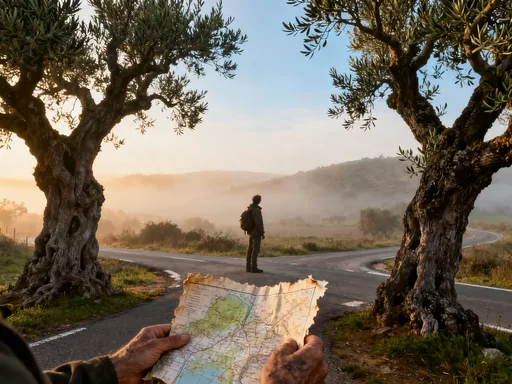
Building such itineraries requires trust—in the place, in the people, in oneself. It means valuing community-led activities over commercial tours, flexible timing over efficiency, and even silence as a legitimate itinerary element. When travelers release the need to 'cover' a destination, they begin to inhabit it. The map becomes less important than the moment. And from that shift, deeper understanding emerges.
The Language of Place: Communicating Without Words
In a foreign village where no common language exists, connection still flourishes. It happens over shared meals, in the rhythm of daily tasks, in the way a grandmother gestures toward a chair, her eyes smiling. Non-verbal communication is not a barrier to travel—it is often its most authentic form. In fact, gestures, silences, and shared labor can build trust faster than the most fluent translation app.
Cultural fluency extends beyond vocabulary. Universal behaviors—eye contact, pacing, the way one accepts a gift—carry meaning across borders. In Japan, offering something with two hands signals deep respect. In Ethiopia, accepting coffee from a host is not just a drink, but an act of belonging. These are languages in themselves, taught not in classrooms, but in moments of mutual presence.
One powerful example comes from the Arctic Circle, where a traveler from Canada joined a Sámi reindeer herder for a night. Neither spoke the other’s language, but they spent hours by a fire, passing bread, stirring soup, pointing at stars. No translation was needed. The act of sharing warmth, of tending the same flame, created understanding deeper than words. The traveler later said, 'I felt more seen in that silence than in years of meetings.'
Meals are particularly potent bridges. Sitting at a table, breaking bread, watching someone prepare food with care—these acts convey hospitality, identity, and love. In Jordan, a traveler with limited Arabic was invited into a Bedouin tent. The host’s wife served tea with deliberate slowness, pouring from a height to aerate it, then nodding for her to drink. No conversation, but a ritual that said, 'You are safe. You are welcome.' These are the moments that transcend language, where the heart speaks in gestures, and the soul recognizes its kin.
Packing Light, Carrying Deep: Essentials for Conscious Travel
What one carries shapes the journey, not just in weight, but in intention. The modern traveler often packs as if preparing for scarcity: multiple outfits, gadgets, backup chargers. Yet the most transformative trips are often those where less was brought, and more was received. Minimalist packing is not about deprivation, but about clarity—making space for experience by reducing clutter, both physical and mental.
Values-based packing shifts the focus from 'what if' to 'what matters.' Instead of three pairs of shoes, consider one sturdy pair and a set of reusable utensils. Instead of a bulky guidebook, carry a small notebook for journaling. Some travelers now include 'open-ended question' cards in their bags—simple prompts like 'What makes you proud of your town?' or 'What did you learn from your parents about living well?' These tools invite connection without intrusion.
Yet the true essentials are not in the bag, but within. Emotional readiness—curiosity, humility, and openness to discomfort—is the real toolkit for meaningful travel. A traveler in Nepal learned this when a planned trek was rerouted due to rain. Instead of frustration, she chose to stay in a village schoolhouse, teaching children English through songs. Years later, she said, 'That unplanned week changed my life more than any summit.' Discomfort, when met with grace, becomes a teacher.
Conscious packing also includes ethical choices. A solar-powered charger, a water filter, a cloth bag for shopping—these small items reflect a commitment to care. They say, 'I am not here to take, but to tread gently.' When travelers carry less, they move with greater ease, both physically and spiritually. They become more available to the moment, more open to surprise. And in that openness, transformation begins.
The Quiet Return: Integrating Journeys into Everyday Life
The end of a trip is not a return to normal, but an invitation to redefine it. Yet this phase is often overlooked. Travelers come home with souvenirs and photos, but without rituals to integrate what they’ve learned. The quiet return—the days and weeks after arriving back—is a critical stage of the journey, where insight must be nurtured or risk fading into memory.
Strategies exist to preserve the journey’s impact. Some create post-trip rituals: lighting a candle from the destination, writing letters to the people they met (even if unsent), or cooking a meal from the region. Others map their experiences onto personal goals—a woman who walked the Camino de Santiago later used her journal to guide a career shift, finding in its pages a pattern of longing for simplicity and purpose.
Sharing stories with depth also matters. Instead of scrolling through photos at a party, one traveler hosts an annual 'story evening,' where she shares not just where she went, but what she felt, what surprised her, what she still doesn’t understand. These are not bragging rights, but offerings—invitations for others to reflect on their own lives.
Ultimately, travel should not be an escape, but a mirror. It shows us who we are when removed from routine, what we value when stripped of comfort, and what we’re capable of when challenged. To let a journey echo beyond the map is to allow it to reshape daily life—to cook more slowly, speak more kindly, listen more deeply. The real destination is not a place on a globe, but a state of being. And every mindful traveler, returning quietly, becomes a shepherd of change—one intention, one moment, one journey at a time.