Where the World Waits Quietly: Rediscovering Travel Beyond the Itinerary
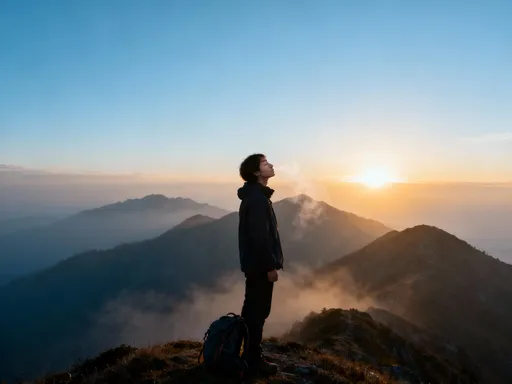
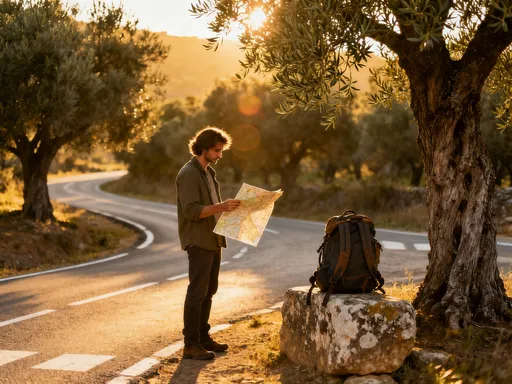
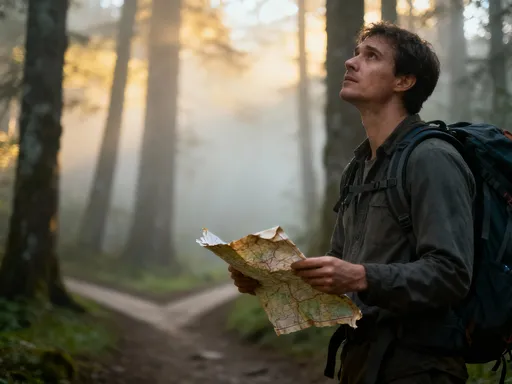
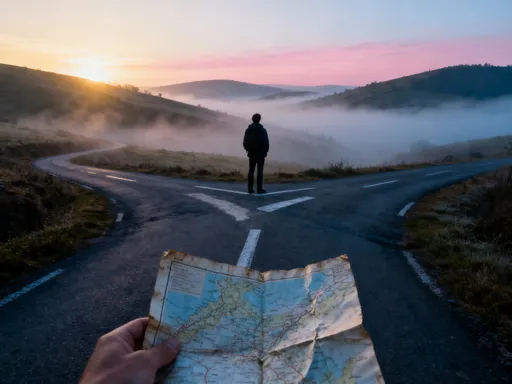
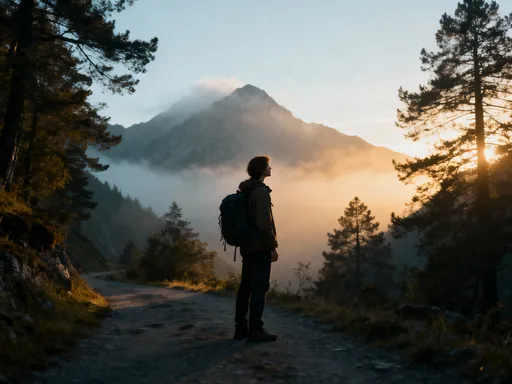
Travel is more than movement—it’s a quiet shift in perspective. Behind every great journey lies not just a destination, but a series of mindful choices: when to pause, where to dive deep, and how to move with intention. In an age of endless recommendations and overcrowded hotspots, true exploration means knowing what to seek—and what to skip. This is not about ticking off landmarks, but about crafting experiences that resonate. From misty mountain trails to sunlit coastal villages, the most memorable trips are shaped long before departure. It’s time to rethink how we choose, prepare for, and live our travels—one deliberate step at a time.
The Soul of Slow Discovery
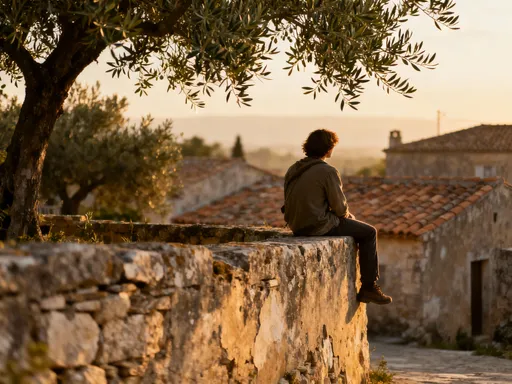
Intentional travel stands in quiet contrast to the hurried rhythm of modern tourism. Where checklist travelers race from city to city, ticking off monuments and museums, the slow traveler lingers—sitting in a village square in Tuscany for three full days, watching the light change on ancient stone walls, observing how locals greet one another with familiar warmth. Studies in experiential psychology suggest that travelers who spend more time in fewer places report higher levels of emotional satisfaction and memory retention. A 2022 World Tourism Organization survey found that over 68% of those who adopted a slow travel approach felt more deeply connected to the places they visited compared to only 34% of fast-paced tourists.
This shift is not merely about geography; it’s about presence over pace. When travelers slow down, they begin to notice the texture of daily life—the rhythm of market vendors arranging produce at dawn, the scent of fresh bread drifting from a neighborhood bakery, the way children laugh as they walk home from school. These details are not captured in guidebooks, yet they form the emotional architecture of a place. By choosing destinations based on atmosphere rather than popularity, travelers align their journeys with personal resonance. A quiet coastal town in Portugal may offer more meaning to someone seeking reflection than a crowded capital, even if it lacks famous landmarks.
Adopting this mindset begins with a simple question: What kind of experience am I truly seeking? Is it novelty, peace, inspiration, or renewal? Answering this allows for intentional destination selection. For instance, someone craving stillness might choose a remote lakeside cabin in Finland over a bustling city break. The goal is not to see more, but to feel more. This philosophy transforms travel from consumption into communion. As slow food celebrates the craft of cooking, so too does slow travel honor the art of being somewhere—fully, deliberately, without urgency.
Listening to the Landscape
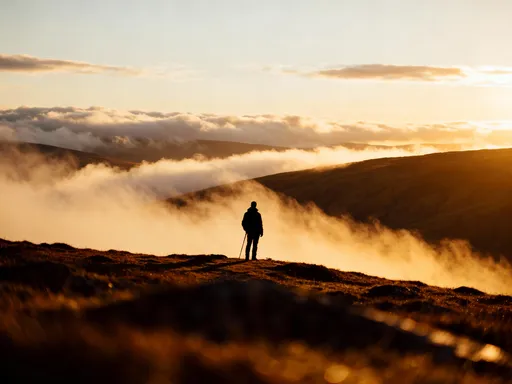
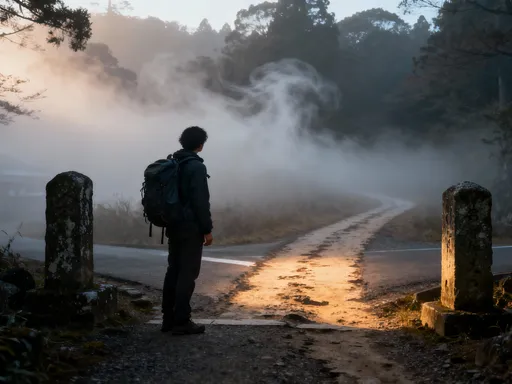
Every place speaks, though not in words. The language of travel is felt in the hush of a mist-covered forest at dawn, in the clatter of wooden stalls in a Kyoto market, in the way sunlight spills across a quiet courtyard in Morocco. Intentional travelers learn to listen—not just with their ears, but with their senses. They become attuned to what might be called **contextual resonance**, the subtle alignment between a person’s inner state and the energy of a place. A traveler seeking calm may feel at home in the rolling hills of the Cotswolds, while another drawn to vibrancy might thrive in the kaleidoscope of Marrakech’s medina.
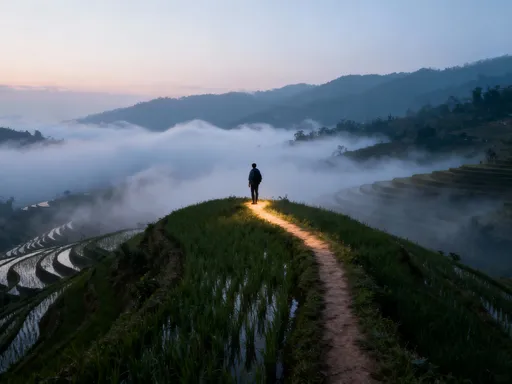
Choosing a destination becomes less about rankings and more about fit. One practical framework involves three filters: climate, cultural rhythm, and accessibility. Climate shapes mood—fewer travelers realize how much a cold, rainy city can dampen spirits if they’re seeking warmth, not just in temperature but in atmosphere. Cultural rhythm refers to the pace of life: does the destination move with quiet deliberation or joyful chaos? Accessibility isn’t only about flight times, but emotional reach—how easily can one move through the space without stress? For example, a village in northern Vietnam with limited English may feel more welcoming than a tourist-heavy European capital if the traveler values authenticity over convenience.
Data can support these intuitive choices. A study by the University of Edinburgh found that destinations with under 5,000 daily visitors to primary attractions had a 41% higher satisfaction score among tourists. Less foot traffic often means deeper connection. Beyond numbers, a simple pre-trip practice can help test alignment: visualization. Spend ten minutes in quiet reflection, imagining a morning in your potential destination. Can you hear the birds? Smell the air? Feel the texture of the streets beneath your feet? If the image feels inviting rather than intrusive, it may be a sign of resonance. The landscape, in its quiet way, is already answering.
The Hidden Map of Off-Peak Moments
Timing is one of the most overlooked tools in the traveler’s kit. Most itineraries are built around availability—holidays, school breaks, flight deals—but the most transformative moments often come from choosing not just where, but when. Visiting Uluru at sunrise in May, when the desert air is cool and the light paints the rock in deep reds and purples, offers a vastly different experience than touring in midday heat during peak season. Similarly, riding Lisbon’s iconic Tram 28 in January, when the streets are free of summer throngs, allows for unobstructed views and spontaneous conversations with locals.
This concept, known as **temporal strategy**, turns time into an ally. Shoulders seasons—those quiet windows between high and low tourism—offer optimal conditions: moderate weather, lower prices, and greater access. In Santorini, for example, September provides near-perfect temperatures and 60% fewer visitors than August, according to Greek tourism data. Yet many travelers remain locked into summer schedules, unaware of the richness available just weeks earlier or later. Even within a single day, timing matters. Arriving at a museum an hour before closing or visiting a popular trail at dawn can transform a routine stop into a moment of stillness.
Logistical tools can aid smarter timing. Local event calendars reveal when festivals or closures might affect access. Airline pricing algorithms show that Tuesdays and Wednesdays often yield lower fares, especially when booked four to six weeks in advance for international trips. Weather pattern analyses help avoid monsoon seasons or extreme heat. But beyond data, flexibility is the true advantage. Travelers who build “time buffers” into their plans—leaving a day open or allowing for spontaneous detours—report higher satisfaction. One traveler, journaling after a trip to Kyoto, wrote: “We stayed an extra afternoon in Arashiyama because the bamboo grove felt different in the rain. That unplanned moment became the heart of the journey.” Temporal strategy is not about control, but about creating space for the unexpected.
Packing Light, Thinking Deep
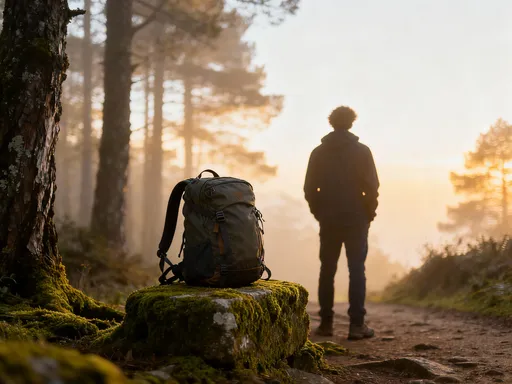
What we carry shapes how we move through the world. Consider two travelers: one dragging a bulky suitcase filled with outfits for every occasion, multiple chargers, and gadgets promising convenience; another with a single bag containing essentials, a worn journal, and space for souvenirs gathered along the way. The difference is not just in weight, but in mindset. Minimal packing is not a constraint—it’s an invitation to clarity. When less is carried, more can be noticed. Feet on cobblestones, wind on an open trail, the smell of rain on warm stone—these sensations are more easily felt when not distracted by physical burden.
Research from the Journal of Travel Psychology indicates that travelers who pack light report 27% higher levels of mobility satisfaction and 31% greater openness to spontaneous activities. This is because physical ease supports mental flexibility. A lighter load means less stress at train stations, easier navigation through narrow streets, and more energy for engagement. But minimalism extends beyond objects—it’s a philosophy. Before departure, a simple **intention audit** can guide choices: “What kind of traveler do I want to be? Curious? Present? Receptive?” Answers to this question can shape both packing and behavior.
One powerful practice is to pack a symbolic item—not for utility, but for meaning. A small stone from home, a favorite bookmark, or a note written to oneself can serve as quiet anchors. A retired teacher from Colorado carried a simple compass on her year-long journey through Southeast Asia. It wasn’t for navigation, but as a reminder to stay oriented—not by direction, but by purpose. Sensory details become richer when the mind is uncluttered: the taste of ripe mango in Hoi An, the sound of church bells in a Parisian suburb, the way sunlight filters through a forest canopy in Canada’s Banff National Park. These moments are not enhanced by gadgets, but by presence. Packing light, therefore, is not sacrifice—it’s preparation for deeper experience.
Conversations That Unfold Places
No guidebook can replicate the warmth of a conversation with a local. Some of the most enduring travel memories are born not from sightseeing, but from connection—asking a fisherman in Greece about his daily catch, sharing sweet tea with a shepherd in Mongolia, or laughing with a shopkeeper in Oaxaca over a shared misunderstanding in broken Spanish. These exchanges, brief as they may be, open doors to the soul of a place. They offer context, emotion, and authenticity that no curated tour can provide.
Listening, not speaking, is the most important travel skill. A 2023 study by the Global Travel Insights Network found that travelers who prioritized conversations with locals reported twice the emotional recall of their trips compared to those who relied on structured tours. The key is **curiosity without agenda**—approaching interactions not to collect stories, but to share a moment. Simple techniques can foster connection: learning three local phrases before arrival (a greeting, a thank you, and “How are you?”), practicing patient silence to allow space for dialogue, and observing daily rituals before participating.
In Bhutan, one traveler sat quietly in a village courtyard for nearly an hour before an elder invited her to join a morning prayer. No words were exchanged at first, only gestures. That moment of patient presence built more trust than any rehearsed introduction could have. Similarly, in rural Ireland, a woman found herself sharing scones with a farmer after stopping to ask directions. What began as a simple inquiry lasted two hours, filled with stories of land, family, and change. These interactions are not about efficiency—they are about humanity. They remind us that travel is not just about seeing the world, but about being seen within it.
Navigating Noise with Grace
The modern travel experience is often crowded—not just by people, but by inputs: constant notifications, over-planned itineraries, the pressure to document everything. In cities like Venice or Bali, the sheer volume of tourists can make authenticity feel out of reach. Yet even in the busiest places, stillness is possible. The key lies in the **focus loop**: a cycle of observe, pause, respond. Instead of reacting immediately to stimuli, travelers can create micro-moments of clarity. For example, standing still for two minutes in a crowded piazza, simply noticing the light on the buildings, the flow of movement, the sound of voices—without reaching for a phone.
Signal detox rituals can restore balance. A 15-minute phone-free walk, a silent coffee in the morning, or a journaling session before bed helps reset attention. These small acts are not escapes, but realignments. In Tokyo, one traveler adopted a “no-screens” rule during her morning commute, choosing instead to observe the quiet discipline of rush hour—people reading, resting, moving with purpose. She later wrote, “I saw the city differently because I wasn’t trying to capture it.” Nature settings, too, benefit from this approach. Hiking a trail in Patagonia without earbuds allows for the full sensory experience—the crunch of gravel, the wind through grass, the distant cry of a bird.
One of the most powerful tools is the “no-plan” day. Scheduling one day per trip with no agenda creates space for serendipity. A canceled ferry in Croatia led a family to discover a hidden cove where they swam and shared fruit with local children. A missed train in Switzerland brought a couple to a mountain village festival they’d never have found otherwise. These moments are not accidents—they are opportunities made possible by disengagement. By navigating noise with grace, travelers reclaim agency. They learn that awareness, not activity, is the true measure of a rich experience.
Returning Changed, Not Just Tan
The journey does not end at the airport. The most meaningful travel continues long after the suitcase is unpacked. Returning home is not a return to the old self, but an invitation to integrate what has been seen, felt, and learned. Many travelers report subtle shifts upon return—new routines, altered perspectives, even career changes. A librarian from Toronto began a community garden after witnessing sustainable farming in Costa Rica. A nurse from Manchester started painting after being moved by the colors of Morocco’s desert at sunset. These are not dramatic overhauls, but quiet transformations sparked by exposure to different ways of living.
The way we process travel shapes its lasting impact. Post-trip practices can deepen integration. One effective method is memory mapping—creating a visual or written record of key moments, not just places visited, but feelings experienced. Another is writing a letter to the place visited, expressing gratitude or reflection. A traveler who spent time in a remote Japanese village wrote: “Dear Yamabiko, thank you for teaching me that silence can be kind. I now sit quietly with my daughter before bedtime, and it has changed our nights.” These acts honor the journey and allow its lessons to linger.
The best trips do not merely change photos—they change **how we see home**. A familiar street may suddenly feel different after walking through ancient alleys abroad. A routine chore may be approached with new patience after watching a Zen gardener spend hours raking gravel. Travel, at its core, is a mirror. It shows us not only the world, but ourselves within it. By stewarding these experiences with gentle reflection, we allow the world to remain quietly present—no longer in distance, but in depth. The journey continues, not on maps, but in the way we live. And so, the world waits—not on postcards, but within us.