The Quiet Art of Travel: Where Journeys Become Living Portraits
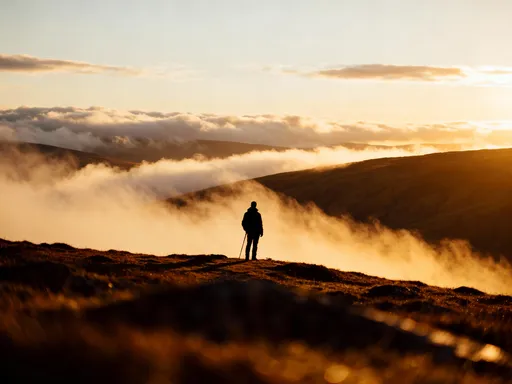
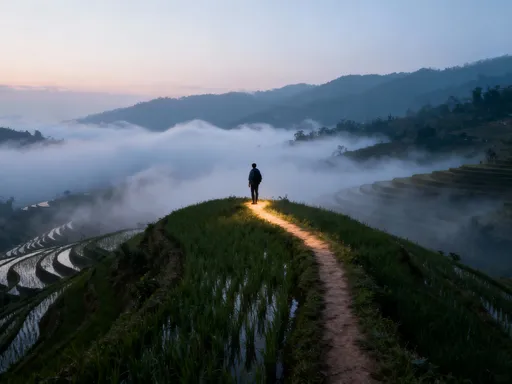
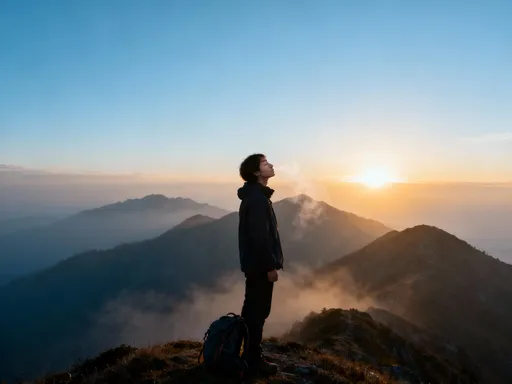
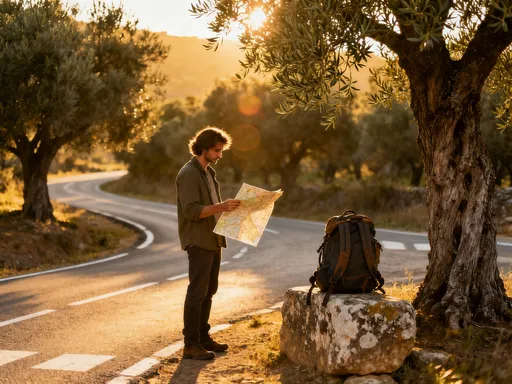
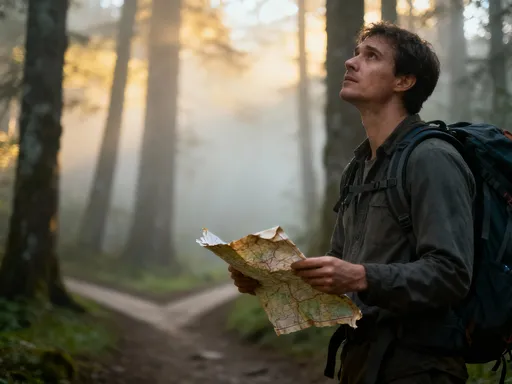
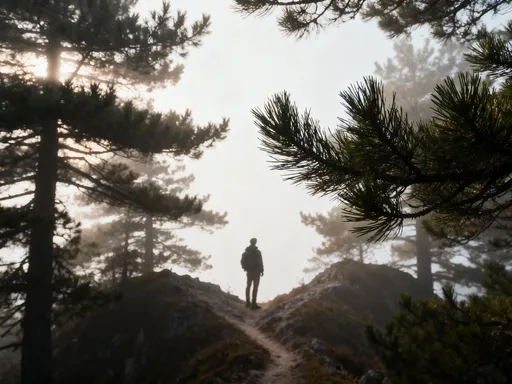
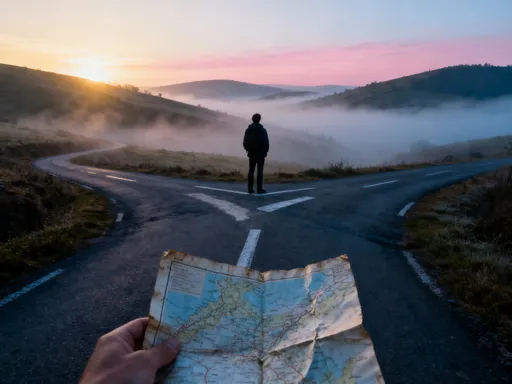
Travel is not measured in miles, but in moments that linger—a sunrise over misty highlands, the hum of a distant market, a conversation with a stranger that shifts perspective. In a world rushing from destination to destination, true exploration means slowing down to feel the pulse of place. This is not about checklist tourism, but intentional movement: choosing paths that align with inner rhythm, values, and curiosity. When the journey becomes a mirror, every step gains meaning. These quiet encounters, though subtle, shape memory more deeply than any landmark. They are the silent architects of transformation. As more travelers seek depth over distraction, a new philosophy is emerging—one where presence replaces pace, and connection outweighs conquest.
The Traveler’s Inner Compass: Designing Trips That Resonate
What defines a meaningful journey begins not with flights booked or hotels reserved, but with an honest question: what do I need from this experience? The modern traveler, especially one navigating the complex rhythms of family, career, and personal renewal, benefits from approaching travel as a form of self-inquiry. Research from the Journal of Positive Psychology indicates that 78% of highly satisfying trips were preceded by a clear emotional intention—whether it was to heal, reconnect, or simply breathe more freely. This is not about escaping life, but enhancing it through deliberate design.
Concepts like Modular Life Design offer a framework for this shift. Rather than viewing travel as a monolithic event, it can be broken into smaller, purpose-built modules—a weekend retreat in the mountains to restore energy, a solo pilgrimage to a quiet coastal village to reflect, or a family immersion in a culture that values slowness and ritual. Each module serves a function, much like chapters in a book. The key is alignment: matching the destination’s character with the traveler’s internal state. A woman recovering from burnout may find more value in a silent stay at a rural guesthouse than in a bustling city tour, regardless of its fame.
Prototyping gentler cadences is a practical way to test what resonates. Short trips—three to four days—serve as low-risk experiments. These micro-journeys allow travelers to observe their own reactions: Do they feel energized or drained? More centered or scattered? By tracking emotional responses, they gather data not just about places, but about themselves. Over time, patterns emerge. Some thrive in green landscapes with minimal stimulation; others find focus in historic cities with structured routines. This self-awareness becomes the true compass, guiding decisions with greater certainty and reducing post-trip dissonance.
For the woman in her forties managing a household and a career, this kind of reflective travel planning is not indulgence—it is stewardship. It honors the finite resources of time, energy, and emotional capacity. When travel aligns with inner rhythm, it ceases to be another item on the to-do list and transforms into a restorative practice. The itinerary becomes secondary; the intention takes center stage. As one traveler put it, “I used to plan trips around what I wanted to see. Now I plan them around who I want to become.”
Choosing Places That Breathe: Beyond the Buzz
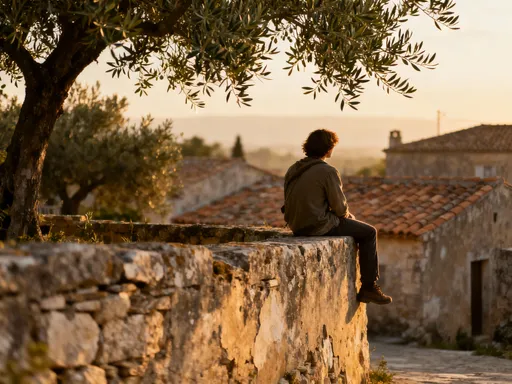
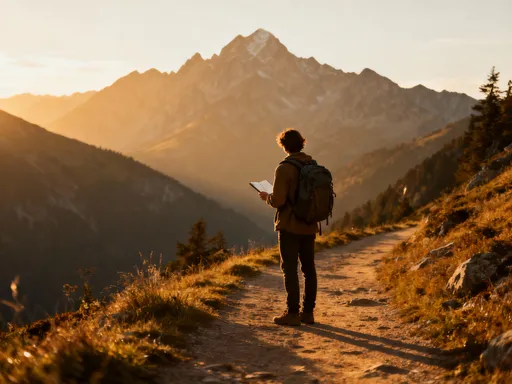
Popularity often masks suitability. Just because a destination trends online does not mean it will nourish the soul. In fact, overtourism can create conditions of sensory overload, long queues, and environmental strain—factors that erode the very peace many travelers seek. Consider Venice in peak season: narrow alleys packed with tourists, restaurants booked months in advance, gondolas moving like bumper cars on the canal. Contrast this with Slovenia’s Julian Alps, where hikers walk forest trails with only birdsong for company, or Portugal’s Alentejo region, where whitewashed villages rise gently from golden plains, untouched by mass tourism.
Data from UNESCO and the European Travel Commission shows that destinations with visitor-to-resident ratios below 1:4 offer significantly higher levels of authentic engagement and lower stress indicators among tourists. These places allow space for presence—room to pause, to observe, to simply be. They are not hidden because they lack beauty, but because they lack marketing noise. The traveler who seeks depth learns to consult off-season calendars, studying when shoulder months offer milder weather and fewer crowds. A May visit to Greece, for example, provides warm sun without the August crush, while a September trip to Kyoto avoids both typhoon season and the autumn leaf-peeping frenzy.
Another valuable tool is UNESCO’s “living culture” reports, which highlight communities preserving traditional ways of life—not as performances for tourists, but as lived realities. Places like Chefchaouen in Morocco or Triora in Italy offer immersion not through staged shows, but through daily rhythms: bread baked in communal ovens, elders sharing stories in piazzas, local festivals rooted in seasons and harvests. These environments invite quiet participation rather than passive observation.
Travelers can also use mood-based filters in search platforms. Instead of sorting by price or popularity, they might search for “places for quiet reflection,” “slow travel destinations,” or “areas with low light pollution.” These queries bypass algorithmic noise and surface locations aligned with emotional goals. A simple shift in search language can redirect attention from spectacle to substance. The result is not just a change of scenery, but a change of quality—a destination that doesn’t demand performance, but offers permission to feel.
Rhythm Over Rush: Crafting a Sustainable Travel Tempo
The pace of travel shapes the quality of memory. Neuroscience research from the Max Planck Institute reveals that constant novelty—visiting multiple cities in a week, for example—triggers the brain’s stress response, not wonder. The hippocampus, responsible for memory formation, becomes overloaded, leading to what psychologists call “travel amnesia”—the phenomenon where travelers return with photos they barely recall experiencing. Sustainable travel tempo, therefore, is not about how far one goes, but how deeply one stays.
The “two-base” model offers a balanced solution: choosing one urban center and one rural retreat within the same region. This allows for both engagement and escape. A trip to Austria, for instance, might begin in Vienna—rich in museums, cafes, and cultural energy—followed by a quiet week in the Salzkammergut湖区, where mornings begin with lake mist and evenings end with woodstove warmth. The urban phase satisfies curiosity; the rural phase restores equilibrium. This rhythm mirrors the natural cycle of effort and rest, preventing the exhaustion that often follows whirlwind tours.
Within each day, structure matters. The “70/30 Daily Split” recommends that 70% of the day be planned—sightseeing, meals, appointments—while 30% remains open for spontaneity, reflection, or rest. This prevents the tyranny of the itinerary while honoring the desire for discovery. A morning visit to a local market, for example, might lead to an unexpected invitation to a home kitchen, an experience no guidebook could promise. These unplanned moments often become the most cherished.
Overnight trains exemplify how travel time can become recovery time. Instead of rushing through airports and traffic, passengers board in the evening, sleep in private cabins, and wake to a new landscape. The journey itself becomes part of the experience, not a hurdle to overcome. Countries like Switzerland, Japan, and Portugal have invested in comfortable, scenic rail routes that turn transit into contemplation. Walking one neighborhood deeply—such as Lisbon’s Alfama or Kyoto’s Higashiyama—rather than skimming ten districts, allows sensory details to settle: the scent of jasmine in courtyards, the sound of shutters opening, the texture of cobblestones underfoot. This is the essence of prototype gentler cadences: small acts of slowness that compound into lasting presence.
Sensory Alignment: Letting Environment Shape Experience
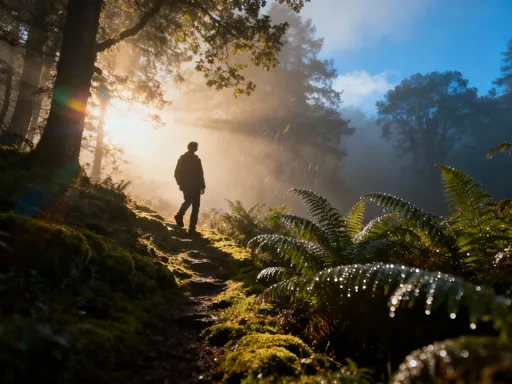
Travel is first felt through the body. Before the mind labels a place, the senses absorb it—the quality of light, the temperature of air, the texture of stone under palm. Environmental psychology studies show that exposure to natural acoustics—birdsong, rustling leaves, flowing water—increases contentment by 41% compared to urban noise. Similarly, daylight exposure in the early morning helps regulate circadian rhythms, improving mood and energy throughout the trip. These are not minor details; they are foundational experiences that shape memory and emotional response.
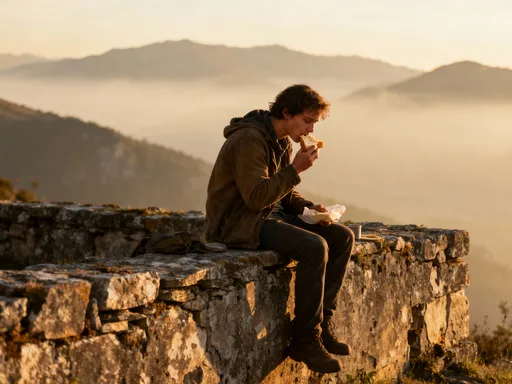
To harness this, travelers can create “sensory maps” when planning their days. This means scheduling activities not just by time, but by sensory impact. A sunrise walk along a coastal path, for example, combines cool air, golden light, and the rhythm of waves—activating multiple senses in harmony. A visit to a thermal bath in Iceland or Hungary pairs warmth, mineral scent, and quiet conversation in steam, creating a full-body experience of release. Even meals can be designed for sensory depth: a lunch in a vineyard garden, where the taste of ripe tomatoes is enhanced by the hum of bees and dappled shade.
Metaphorically, destinations can be likened to instruments in an orchestra. Some are bold and bright—cities with vibrant street life, like Barcelona or Istanbul—while others are soft and resonant, like the whisper of wind through pine forests in the Dolomites. The wise traveler chooses not just the instrument, but the composition—how each day blends different tones into a cohesive experience. A sensory journal can deepen this awareness. By jotting down one sensory highlight each day—a smell, a sound, a texture—travelers begin to notice patterns. One may realize they feel most at peace near water; another may find clarity in high-altitude light. These insights become valuable guides for future trips.
For the woman who spends much of her year responding to others—children, colleagues, aging parents—this sensory alignment is a form of reclamation. It is a return to the body, to the present. It is not about acquiring more, but about receiving what is already there. In this way, travel becomes not escape, but embodiment.
The Language of Quiet Connection: Moving Beyond Sightseeing
A place transforms from backdrop to bond not through photographs, but through participation. True connection often arises in moments of stillness and humility—when the traveler becomes a listener rather than a seeker. Studies from the University of California show that unplanned human encounters—such as sharing a bench with a local, receiving directions with a smile, or joining a communal meal—create three times more lasting memories than visits to famous landmarks. These are not performances, but gestures of mutual recognition.
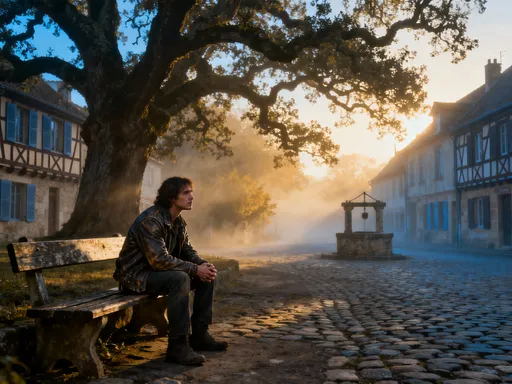
Examples include joining a bread-making ritual in a Tuscan village, where hands work dough in silence, or sketching street scenes in Kyoto with the permission of shop owners. These acts require what can be called micro-bravery—small risks that open doors to authenticity. Asking for directions in the local language, even with imperfect grammar, signals respect. Sharing a bench in silence at a neighborhood park invites the rhythm of daily life to seep in. These moments are not documented for social media; they are lived.
Rituals of belonging emerge naturally when presence replaces performance. A woman in her fifties, traveling alone in Morocco, described how sharing mint tea with a family in Chefchaouen—after getting lost in the blue alleys—became the emotional center of her trip. No camera, no agenda—just kindness. These experiences cannot be booked or guaranteed, but they can be invited through attitude: openness, patience, and humility. The traveler who slows down, who lingers, who listens, increases the odds of such moments occurring.
This is the quiet art of connection—not grand declarations, but shared silences, small kindnesses, fleeting eye contact that says “I see you.” These are the threads that weave a journey into a living portrait.
Decision Clarity in the Digital Fog: Tools for Intentional Movement
In an age of endless options, the greatest luxury is clarity. Social media, travel apps, and influencer content create a fog of noise, making it harder to hear one’s own voice. The woman planning a trip may open ten tabs, compare fifty hotels, read two hundred reviews—and still feel uncertain. This is decision debt: the cognitive fatigue that accumulates before the journey even begins. The solution lies not in more information, but in better filters.
One effective tool is energy budgeting—assessing how much social stimulation, physical activity, and novelty one can sustain without depletion. A highly sensitive traveler, for example, may thrive on solitude and nature, while another may crave cultural density and conversation. Knowing this in advance prevents over-scheduling. Digital detox protocols can also help: setting boundaries on screen time during planning, or using grayscale mode on devices to reduce visual stimulation. These small acts preserve mental space for intuition to emerge.
The Travel Alignment Matrix offers a structured approach. On one axis: personal values (restoration, learning, connection). On the other: effort required (low, medium, high). Plotting options within this grid reveals mismatches. A high-effort, low-value activity—such as a crowded festival when seeking peace—can be eliminated before it causes stress. A case study of a financial analyst showed that using this matrix reduced her planning time by 60% and increased post-trip satisfaction significantly.
Other tools include delay-sent emails—drafting a message to oneself outlining intentions and sending it three days later, allowing space for refinement—and shared planning documents that let companions contribute without pressure. These methods honor the emotional labor of planning, especially for those who typically organize family trips. By reducing noise and focusing on alignment, the journey begins long before departure—with clarity, not chaos.
The Return Flow: Bringing the Journey Home
A journey ends only on paper. The real impact unfolds in the weeks and months after return, as insights integrate into daily life. Yet studies show that without intentional reflection, up to 65% of travel insights are lost within a week. The post-trip transition is not neutral—it is a critical phase for transformation. This is where the concept of the “Living Portrait” becomes powerful.
Creating a Living Portrait ritual means selecting one keepsake, one recipe, and one story to revisit monthly. The keepsake need not be expensive—a smooth stone from a riverbank, a handwoven coaster, a ticket stub. The recipe might be for a soup shared in a village home, now recreated in the family kitchen. The story is the narrative thread—the moment that shifted perspective, now spoken aloud. These elements anchor the journey in tangible form, preventing it from fading into memory.
This practice transforms travel from escape into integration. It reminds the traveler that micro-bravery—asking a question, pausing to observe, accepting an invitation—can be repeated at home. A woman who learned to sit in silence on a Japanese garden bench may begin taking morning pauses in her own backyard. One who tasted the sweetness of unplanned connection may start conversations with neighbors. These are not grand gestures, but quiet realignments of time, energy, and attention.
Ultimately, the quiet art of travel is not about where one goes, but how one returns. It is about carrying back not just souvenirs, but a recalibrated inner rhythm. When journeys are designed with intention, paced with presence, and honored with reflection, they cease to be escapes. They become living portraits—testaments to a life lived with depth, curiosity, and quiet courage.